“It’s Not About Me, It’s About We”

New NDSU President Marshall Stewart and First Lady Jan Stewart say their leadership will be de­fined by what the NDSU community can accomplish together.

Story by Micaela Gerhardt | Photos by Justin Eiler | Sept. 2026

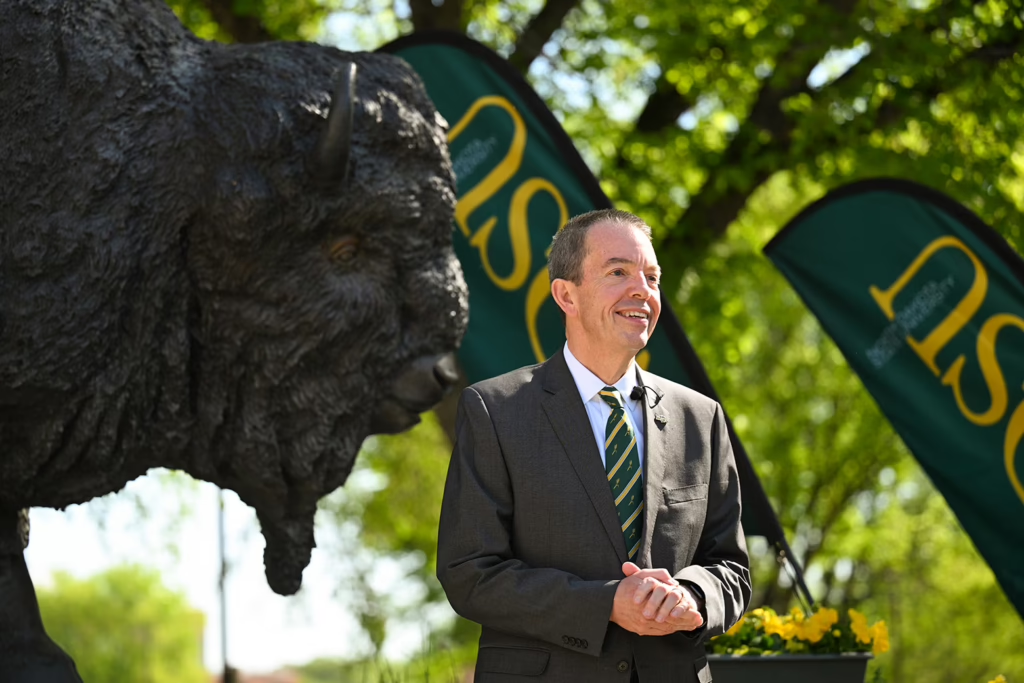
NDSU President Marshall Stewart speaks at a press conference on campus.

Dr. Marshall Stewart begins his ­first official day as NDSU’s 16th president on a holiday. The next morning, he greets me in the doorway of his office suite, grinning with all the exuberance of a kid on his ­first day of school. 

NDSU First Lady Jan Stewart arrives promptly, introducing herself with the charming southern drawl both she and Marshall possess as native North Carolinians (though if you ask them, they might gently tease that we’re the ones with accents). 

The interview begins, and we’re off to the races. To set the table, Marshall outlines his defining priorities and commitments. 

Our land-grant mission will be core to his leadership, he says — after all, Marshall is the product of a land-grant education (NC State) and has served 30 years in various leadership roles at land-grant institutions including NC State, University of Missouri, and, most recently, Kansas State. 

“A land-grant means that you’re deeply committed to the state and to access and affordability,” Marshall said. “We want to make sure that people have accessibility, not only if they’re a student getting a degree, but also those North Dakotans and others across the country that may bene­fit from the knowledge we create every day.” 

He promises to listen and learn so that he can lead effectively (and if you want to drop him and Jan a friendly welcome or word of advice, click the button below!). 

“Do your thing, son”

— Advice from Marshall’s high school ag teacher

Let’s start at the beginning. Marshall’s leadership journey convenes at the ripe young age of 14, when he meets his first agriculture teacher. Adolph Warren changes the course of Marshall’s life by forecasting a future that, as a freshman in high school, he could not yet see for himself. 

“Mr. Warren would say, ‘Do your thing, son,’ and for every student there was a different thing,” Marshall said. “For me, he said, ‘You’re a leader. That’s what you’re going to be.’” 

One of the first things he guided Marshall toward was participation in FFA, specifically livestock judging, where Marshall honed his skills in oral reasoning: providing clear and decisive rationale for his judging choices. 

“I think out of that really came this ability to communicate — to assess, judge, make a decision, and go,” Marshall said. “I had no idea what that was preparing me for, but I think Mr. Warren knew exactly what he was doing.”

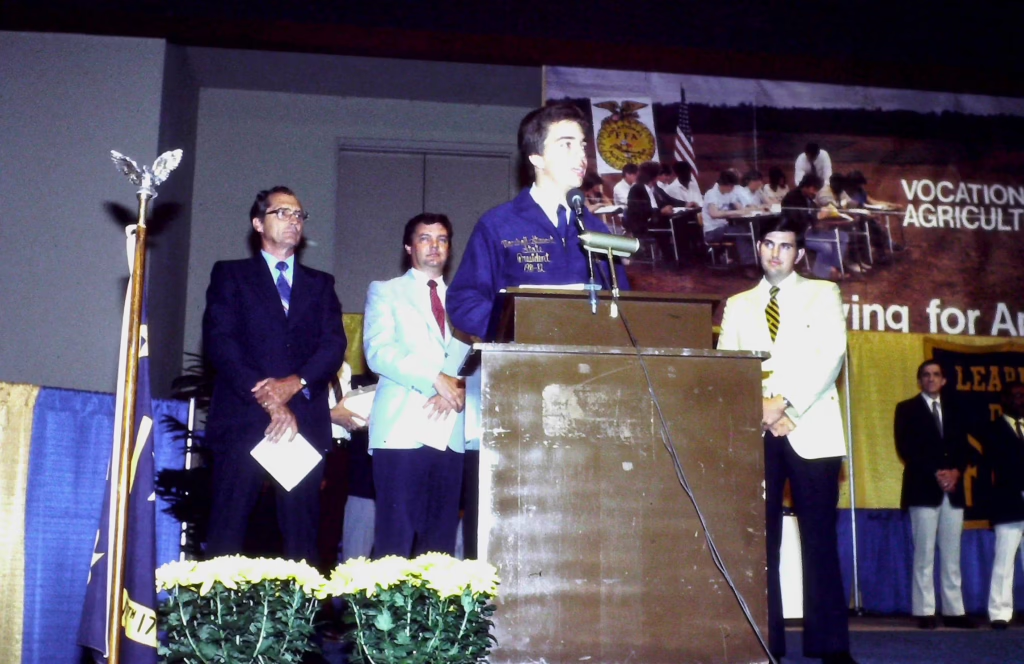
An 18-year-old Marshall Stewart is pictured serving as North Carolina FFA president in June 1982.
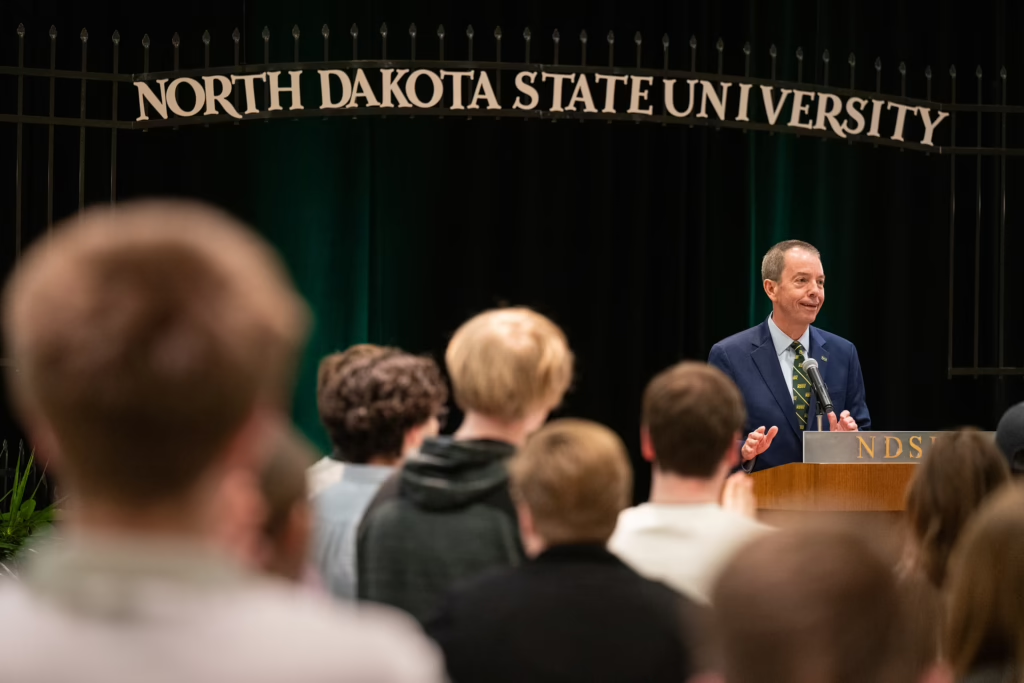
Marshall Stewart delivers remarks to the NDSU community on March 30, 2026, the day he was announced as NDSU president.

A tale of two presidencies: On the left, an 18-year-old Marshall Stewart is pictured serving as North Carolina FFA president in June 1982. He is surrounded by the ag teachers who mentored him, Adolph Warren, Weldon Faircloth, and Charles West. On the right, Dr. Marshall Stewart delivers remarks to the NDSU community on March 30, 2026, the day he was announced as NDSU president. 

Fast-forward, Marshall became state FFA president and later spent seven years of his career with National FFA. His son, John, was elected as state FFA president 30 years after Marshall, making them the first father-son duo to both achieve the FFA presidency in North Carolina. They also earned American FFA degrees, the highest honor bestowed by the organization.

“The sons [and daughters] of toil”

— Excerpt from the Morrill Land-Grant Act of 1862

Marshall’s grandparents John and Iva Stewart were cotton mill workers and tenant farmers in rural South Carolina. Without the opportunity to pursue an education, they never learned to read or write. Their son, Marshall’s father, experienced poverty and isolation in childhood, but a chance encounter with a teacher named Grace changed his life. 

“Had it not been for that interception …” Marshall begins, but reflecting makes him emotional. I imagine it is a culmination of the past arriving at the present, the story heightened by the significance of this day: One generation removed from his grandparents’ inability to access education, Marshall is now serving as the president of a university. 

Jan picks up where his story trails off, speaking in her quiet, measured way. “They’ll say in Marshall’s family that his father was ‘saved by Grace.’ She saw something in him and really pointed him toward college and faith.” He eventually became a pastor. 

For Marshall, his father’s experience hearkens back to the ideal of the land-grant mission: that education should be accessible to all. 

“You could be ‘the sons and daughters of toil,’ and you had the chance to go to school,” Marshall said, referencing the 1862 Morrill Land-Grant Act, signed by President Abraham Lincoln (and amending the original legislation by including “daughters”). 

“Land-grants created social and economic mobility for generations of people … It might have started in 1862, but I would say that in 2026, we need land-grants more than ever.”

“By choice and not by chance”

— Excerpt from the Ag Teacher’s Creed

Inspired by the influence of his three agriculture teachers, Adolph Warren, Charles West, and Weldon Faircloth, Marshall began his career as a high school ag teacher. He took the Ag Teacher’s Creed, proudly declaring, “I’m an agricultural teacher by choice and not by chance.” 

While his job title is different today, he assures me that his calling — to guide people toward self-discovery, to help them surpass what they thought was possible and achieve something greater — remains the same. 

 “As a teacher, for each of your students, you help them figure out what’s possible, what their potential is, and grow them up, and it’s the same running a team or a staff,” Marshall said. “People have asked me why I want to be president. I want to serve, lead, and grow others.” 

Great teachers, Marshall says, bring knowledge out of students versus pouring it into them. To me, this says something about a fundamental belief he must hold: that his students and colleagues are capable. 

When working with students or professionals, he poses a hypothetical question, “Who do you want to become in five years?” 

“Part of the joy of the work, be it a teacher or be it president of a university, is saying, ‘We are going to go beyond that.’ It’s the same thing with the university … what I want to do is help take NDSU beyond what we have ever imagined.”
“The strength of the Bison is the Herd”

— Excerpt from “The Law of the Prairie”

From his high school teachers, like Adolph Warren, to his colleagues in FFA and at land-grant universities, Marshall says a lot of people on the way opened doors for him. 

“None of us get there by ourselves,” he says, and the same rings true for NDSU. Marshall believes it will take the strength and tenacity of all Bison to help NDSU reach new heights and overcome challenges facing institutions of higher education across the U.S. 

“Some people have said, ‘We look forward to what you’re going to do,’ and I say, ‘No, what we’re going to do.’ It’s about what we can create together as one NDSU.” 

Marshall invites NDSU alumni and friends to help amplify and invest in what he calls the “R’s”: recruitment and retention, NDSU’s R1 research status, and strong relationships in North Dakota, Minnesota, and beyond. 

“Over the next decade, there’s going to be an intense competition for students and for talent, and we’re going to have to work harder,” Marshall said. “Alumni have a vital part. They know what it means to be a Bison, and so their ability to connect with students, families, and people in- and out of the state is really important.”

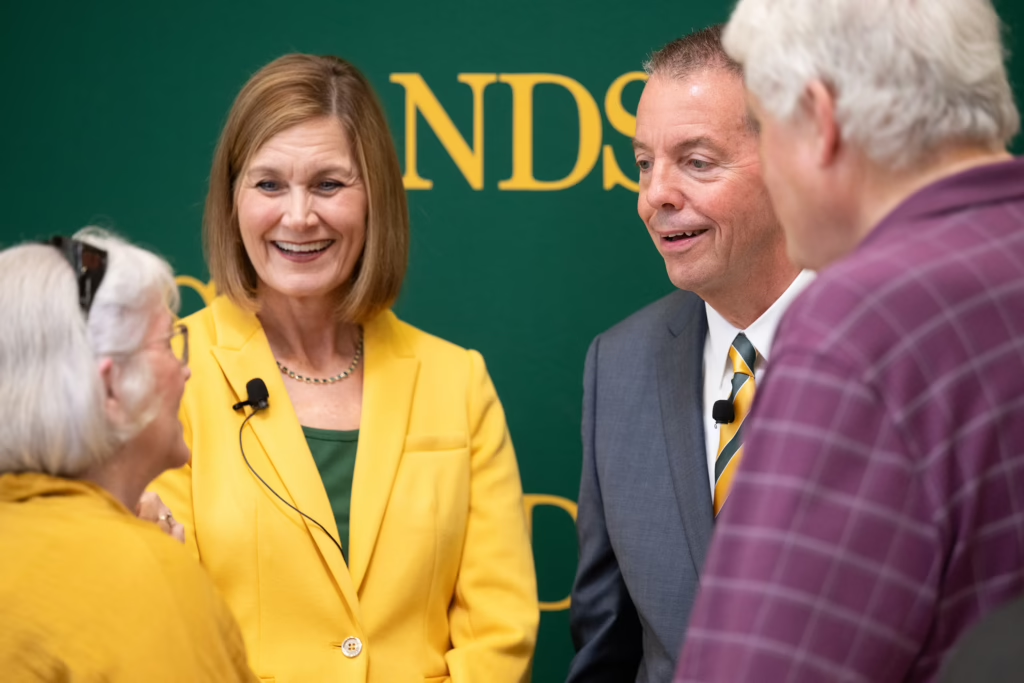
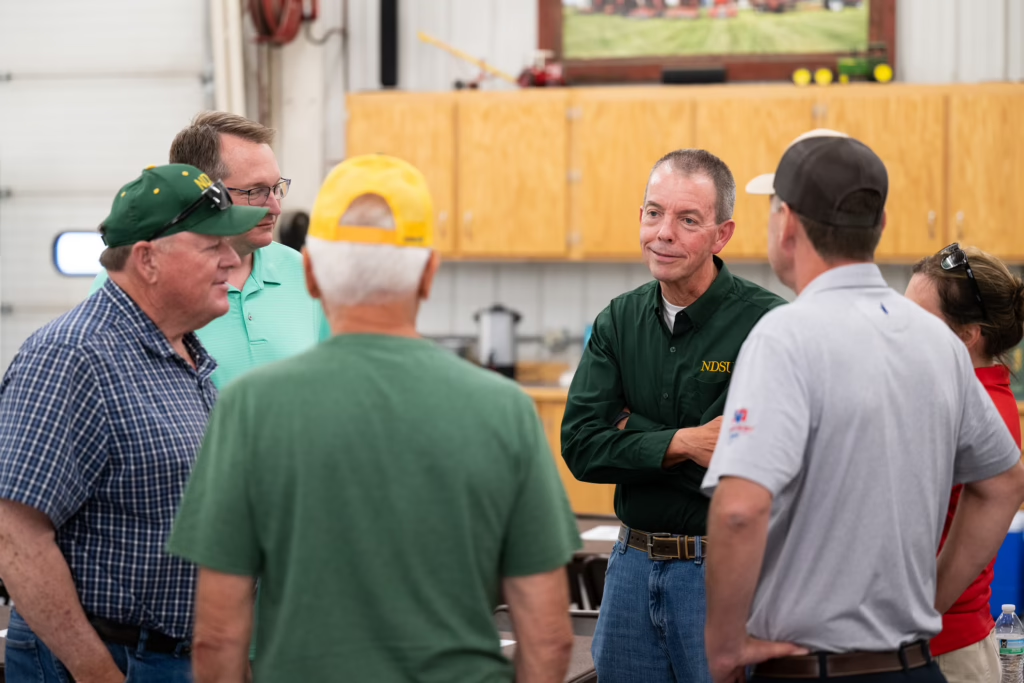
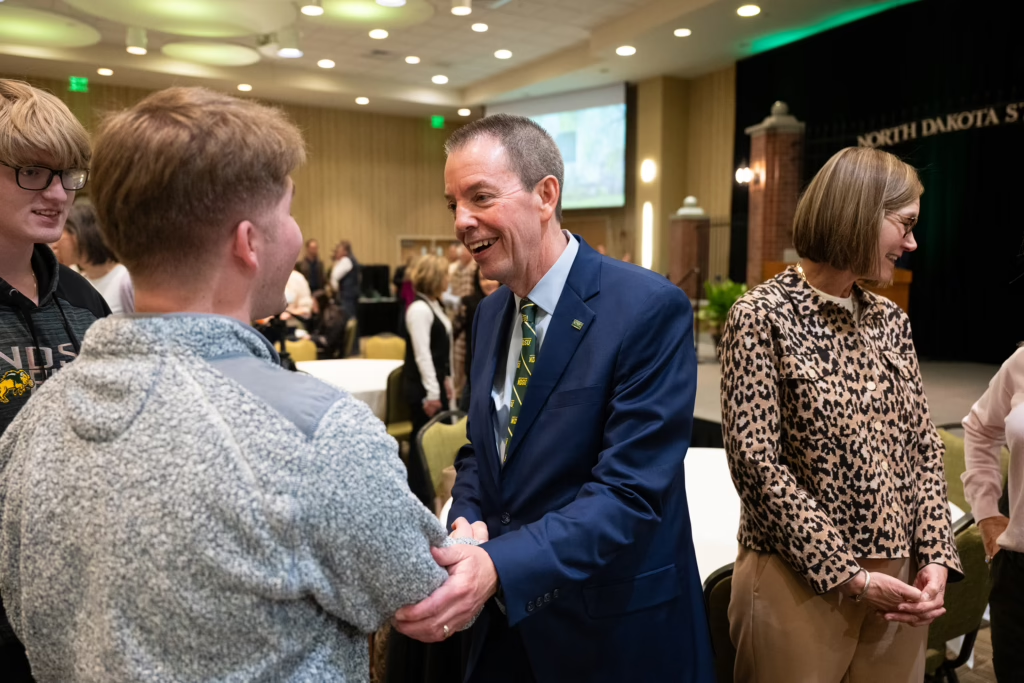
This summer, President Stewart and Jan met NDSU community members and North Dakotans through campus events and a statewide tour that included visits to NDSU Field Days locations. 

This summer, President Stewart and Jan met NDSU community members and North Dakotans through campus events and a statewide tour that included visits to NDSU Field Days locations. 

There are things NDSU can be louder about, he says. For example, NDSU students who earn a bachelor’s degree complete it in less than four years (3.8) on average, while many universities focus on improving five- or six-year graduation rates. 

“That’s called affordability. We’re getting students out quicker. We need to celebrate that.” 

He believes NDSU has the opportunity to position itself as one of the leading land-grants in the country, and he feels affirmed in being at the helm. 

“It’s very humbling, and it’s also a huge responsibility — that responsibility is not lost on me,” Marshall said. But he and Jan also share a sense of peace they trace back to their faith. 

“I want to do well, and go with you, and that’s where relationships and trust will come in,” Marshall said. “We can build that together.”

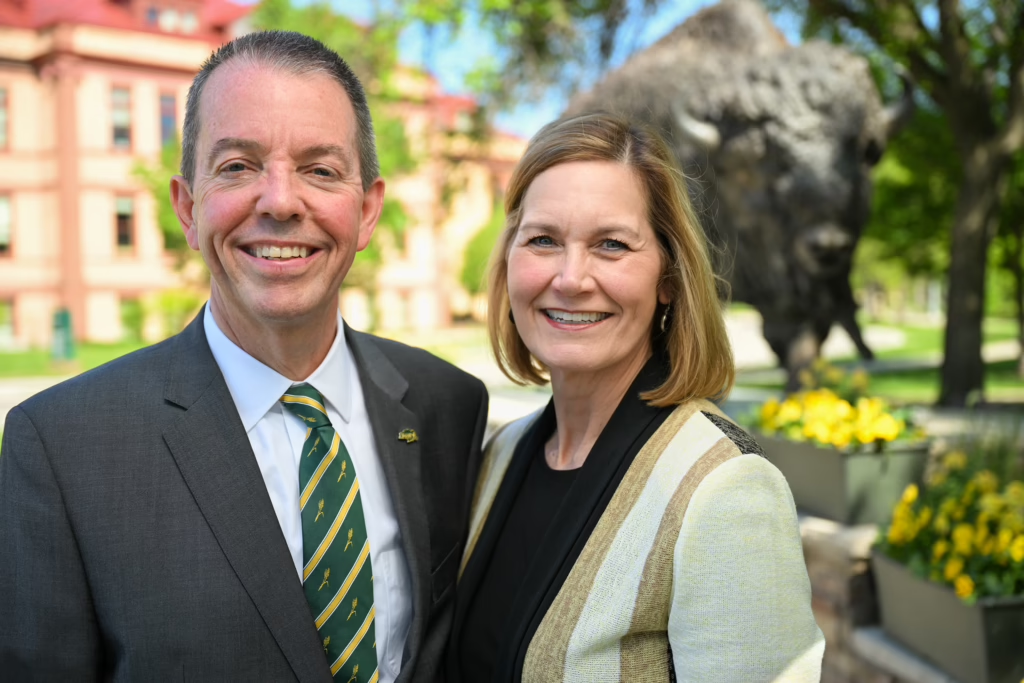
President Marshall Stewart and First Lady Jan Stewart posed in front of the Bison statue.

GET TO KNOW THE STEWARTS

Share This Story

Related Stories

Margaret and her husband, Hugh Veit ’79, established the Eleanor S. Fitzgerald Memorial Graduate Student Scholarship to support NDSU students earning advanced degrees in the Department of Health, Nutrition, and Exercise Sciences or the Department of Human Development and Family Science.

Core areas of home economics remain part of current NDSU degree programs such as accounting; apparel, retail merchandising, and design; education; family and consumer science; financial planning; human development and family science; interior design; and nutrition science.

Home economics programs opened doors, particularly for women, to earn college degrees and pursue careers in education, Extension, state and federal government, business and industry, health care, and more. NDAC listed domestic economy as one of its courses in its founding year, 1890.

Established by Dr. Teresa Conner, dean of the NDSU College of Health and Human Sciences, and co-chaired by Dr. Margaret Fitzgerald ’83 and Col. Esther Meyers ’75, the Wisdom Keepers provide support and share their knowledge and expertise with students, faculty, staff, and leadership in the College.

The home management house at NDAC was the first facility built on a college campus specifically for home management practice. In 1954, it was named in honor of Alba Bales, the first female academic dean at NDAC.