
Eighteen engineers. One robot. Three days to show what’s possible.
Read More

As you drive through northern or central North Dakota in the late spring and into summer, between acres of golden wheat and green soybeans, you may be greeted by a surprising shade of blue: fields of Linum usitatissimum. Flax.
North Dakota leads the nation in flax production, and the crop’s significance stretches well past feed, fiber, and baked goods. Flax has played a pivotal role in the research and development of paints and coatings that have helped position NDSU as a leader in the field of coatings and polymers for more than a century.
In the early 1900s, paints and protective coatings were developed primarily using lead carbonate and pure linseed oil, which is derived from flax. Despite its widely acknowledged toxicity, pure lead paint was highly sought after by U.S. consumers — it had exceptional durability, greater adhesion, moisture resistance, and long-lasting color.
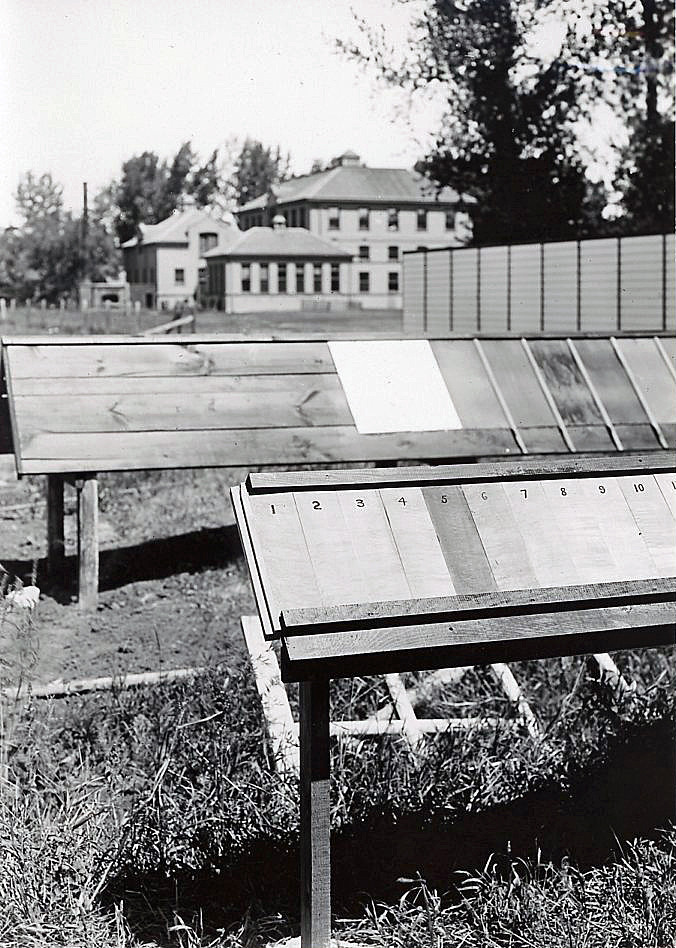
To cut costs and increase volume, some producers would “adulterate” lead paints, adding ingredients like water, chalk, or oils other than linseed oil. In response, the North Dakota legislature passed “An Act to Prevent the Adulteration and Deception in the Sale of White Lead and Mixed Paints,” which meant that paints and coatings needed to be rigorously tested and researched to aid in the enforcement of the new law.
The conditions in North Dakota were ideal: The extreme weather was perfect for testing durability, flax was plentiful, and a pioneer in paint chemistry, Dr. Edwin F. Ladd, was on staff at the state’s land-grant institution.
Most modern coatings are polymer-based. Polymer molecules act as binders to form protective, functional, or decorative films on surfaces. The coating offers properties like durability and corrosion resistance.
Edwin arrived at NDSU (then North Dakota Agricultural College) as its second faculty member in its founding year, 1890. A passionate consumer advocate, he served the university first as a professor of chemistry, then as the dean of the chemistry department, and finally as the president from 1916 to 1921. Edwin and the chemists at NDAC were responsible for testing various paints and coatings, and in 1906, the first formal college course in paints and varnishes began at NDAC.
The program continued to grow in the following decades. In 1942, The New York Times published a short article detailing the specialized curriculum and successful job placement rate for graduates of the protective coatings program at the “small college located out on the Northern Plains.” Twenty years later, “polymers” was added to the department name to keep up with the new developments in the relationship between plastics (polymers) and coatings. The rise of synthetic polymers (as opposed to natural materials like wood, metal, and rubber), plus a focus on mass production and disposable products, created a higher need for research and development in the field.
As research in coatings and polymers evolves, the list of use cases grows: Corrosion protection for pipelines and bridges. Automotive paints with long-term durability plus UV and scratch resistance. Plastic packaging for food, medicine, and chemicals. Anti-viral coatings that kill microbes. And NDSU researchers are on the cutting edge.
The department collaborates with many organizations to advance research discoveries:
Today, NDSU’s programs are some of the most unique and sought-after in the nation. Students may earn a master’s and doctoral degree in coatings and polymeric materials, and a minor is available for any student majoring in a science or engineering discipline.
Between the ample laboratory spaces in Sugihara Hall, a dedicated teaching lab in the A. Glenn Hill Center, and the state-of-the-art Bioactive Materials Research Laboratory at the NDeavor™ Barry D. Batcheller Tech Park, students can focus on robotics, machine learning, composition research, liquid coatings, bioplastics and thermo-plastics, and more, plus have the opportunity to partner with private industry, government organizations, and researchers around the world. Program graduates are highly sought-after by industry and experience exceptionally high job placement.
What began more than a century ago as a paint-testing initiative has become an industry-leading research powerhouse with global impact. Below, experience some of the department’s current projects.
Adhesion-resistant coating materials

PARTNER: Office of Naval Research
ROUGH WATERS: When a ship is immersed in a body of water, it accumulates organisms like barnacles, algae, and bacteria that like to live on its surfaces. This is called fouling. Fouling creates drag, which can act like sandpaper, increasing fuel consumption and emissions, and even impairing ship operation.
OPPORTUNITY FOR INNOVATION: Most current antifouling coatings for ship hulls release toxic biocides. Researchers across the world are interested in finding new types of nontoxic antifouling coatings. NDSU has been working with the Navy since 2002 on various approaches in response to the epic challenge of designing a coating that an estimated 4,000 different organisms — and their unique (and not well-studied) adhesion mechanisms — will not adhere to.
UNEXPECTED DISCOVERY: Around 2017, NDSU researchers found that certain coatings that resisted adhesion of marine organisms also had low adhesion for ice. This led to broadening the program to investigate coatings for ship superstructures (which includes the main deck, bridge, and communication centers of a ship) in addition to the hull — plus additional ice adhesion uses on power lines, solar panels, and aircraft. The ideal result? A tough, durable nontoxic coating that lowers environmental impact in bodies of water and maintains safe, sustainable use of essential infrastructure and equipment.
IN A LANDLOCKED STATE? The Bioactive Materials Research Laboratory is a state-of-the-art facility at NDeavor dedicated to studying the interactions of coatings and materials with live organisms. It includes a suite of automated tools, ocean water conditions for testing, and AI and machine learning to prepare coatings and analyze data. And yes, bacteria, algae, and barnacles are maintained year-round and used for research.
LEAD RESEARCHERS: Dr. Dean Webster, chair of NDSU Coatings and Polymeric Materials Department, with Dr. Andrew Croll, professor of physics, and Dr. Bakhtiyor Rasulev, associate professor of coatings and polymeric materials
Improving nonstick surfaces with a local crop

PARTNER: North Dakota Soybean Council
FLUOROPOLYMERS 101: Think of the nonstick pan you use for fried eggs. The nonstick coating that makes cooking and cleaning easier is made with a fluoropolymer. Graduate researcher Marcel Roy Domalanta ’26 describes a polymer as a “long, twisty chain” — like a necklace made up of carbon “beads.” And if fluorine atoms are added to the carbon beads in that chain, you get a fluoropolymer like Teflon.
NOT-SO-STICKY SITUATION: Fluoropolymers are difficult to adhere to surfaces. Current adhesion methods are often difficult to implement, expensive, and can be harmful to the environment. Plus, when added binding materials get removed from wear and tear, they release compounds that can be harmful to users and the environment.
SOY-BASED SOLUTION: Soybean extracts contain sticky compounds that have anchoring parts — turns out, it sticks to both fluoropolymers and metal surfaces. Adding as little as 1% of soybean extract to a fluoropolymer solution improves adhesion strength and corrosion protection.
ND ranked No. 4 in acres of soybeans planted and harvested
(ND Soybean Council, 2024)
acres of soybeans harvested in ND
(ND Soybean Council, 2025)
GLOBAL IMPACT: Beyond cookware, this simple, inexpensive, eco-friendly solution can also strengthen adhesion and extend the lifespan of steel structures like those used for industrial equipment, construction, and other consumer products like appliances and electronics. Regionally, the project strengthens North Dakota’s soybean economy by creating new applications. Nationally and globally, it supports the shift toward greener technologies and reducing the environmental footprint of protective coatings across industries.
LEAD RESEARCHERS: Marcel Roy Domalanta ’26, graduate researcher, and Dr. Eugene Caldona, principal investigator and assistant professor of coatings and polymeric materials
Developing and strengthening corrosion-resistant hybrids

CHALLENGE: When an aerospace vehicle like an airplane, spacecraft, or rocket launches, its exhaust plumes and external surfaces can reach hundreds and even thousands of degrees Fahrenheit — extreme temperatures that can destroy coatings and even melt metal.
LIQUID TO SOLID: Researchers at NDSU are working on a new type of protective coating that can withstand extremely high temperatures, like those reached by aerospace vehicles. They start with a liquid polymer that, when heated to high temperatures, chemically transforms into a solid, glass-like ceramic called silicon oxycarbide (SiOC). This research offers a reliable way to protect critical assets that operate in harsh, high-heat environments, like transportation exhaust systems, the energy sector, and various other industrial applications.
UNEXPECTED DISCOVERY: A surprising chemical compound that helps the coating work? Rust. When the metal substrate begins to rust at high temperatures, the rust components unexpectedly diffuse into the coating matrix. Instead of causing failure, the rust acts as a filler that prevents the coating from shrinking and cracking. This allows the final protective film to remain solid and stick tightly to the metal.
HOTTER YET: The next steps for this project involve pushing the boundaries by testing the coating at even higher temperatures (more than 1,800 degrees Fahrenheit) and measuring performance properties like how much it expands or contracts and whether it cracks or survives when rapidly heated or cooled.
LEAD RESEARCHERS: Dr. Xiaoning Qi, assistant professor of coatings and polymeric materials, Dr. Ravi Arukula, postdoctoral research associate, and Taehyun Kim, Ph.D. student
Marvin’s partnership with NDSU is a testament to the power of community, innovation, and the belief that anything is possible.
Read More Margaret and her husband, Hugh Veit ’79, established the Eleanor S. Fitzgerald Memorial Graduate Student Scholarship to support NDSU students earning advanced degrees in the Department of Health, Nutrition, and Exercise Sciences or the Department of Human Development and Family Science.

Core areas of home economics remain part of current NDSU degree programs such as accounting; apparel, retail merchandising, and design; education; family and consumer science; financial planning; human development and family science; interior design; and nutrition science.

Home economics programs opened doors, particularly for women, to earn college degrees and pursue careers in education, Extension, state and federal government, business and industry, health care, and more. NDAC listed domestic economy as one of its courses in its founding year, 1890.

Established by Dr. Teresa Conner, dean of the NDSU College of Health and Human Sciences, and co-chaired by Dr. Margaret Fitzgerald ’83 and Col. Esther Meyers ’75, the Wisdom Keepers provide support and share their knowledge and expertise with students, faculty, staff, and leadership in the College.
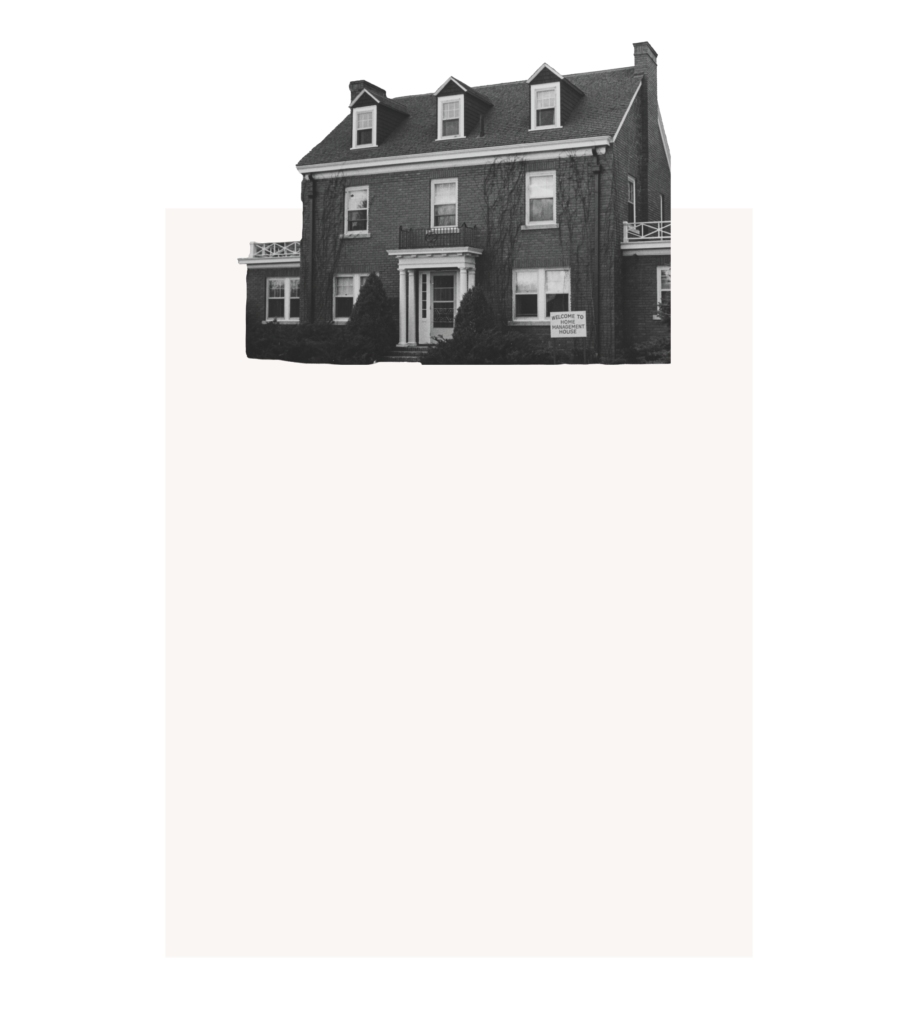
The home management house at NDAC was the first facility built on a college campus specifically for home management practice. In 1954, it was named in honor of Alba Bales, the first female academic dean at NDAC.