Mechanics Behind the Music

A storied instrument finds new life through 3D-printing technology.

Story by Kara Lidberg ’17 | Photos by Kensie Wallner

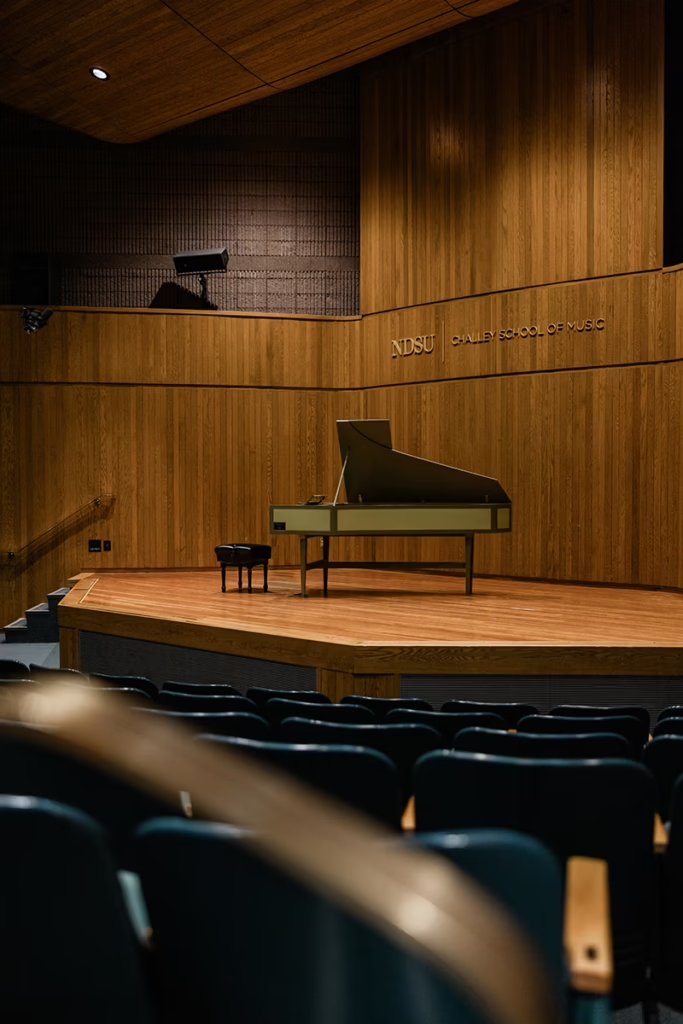
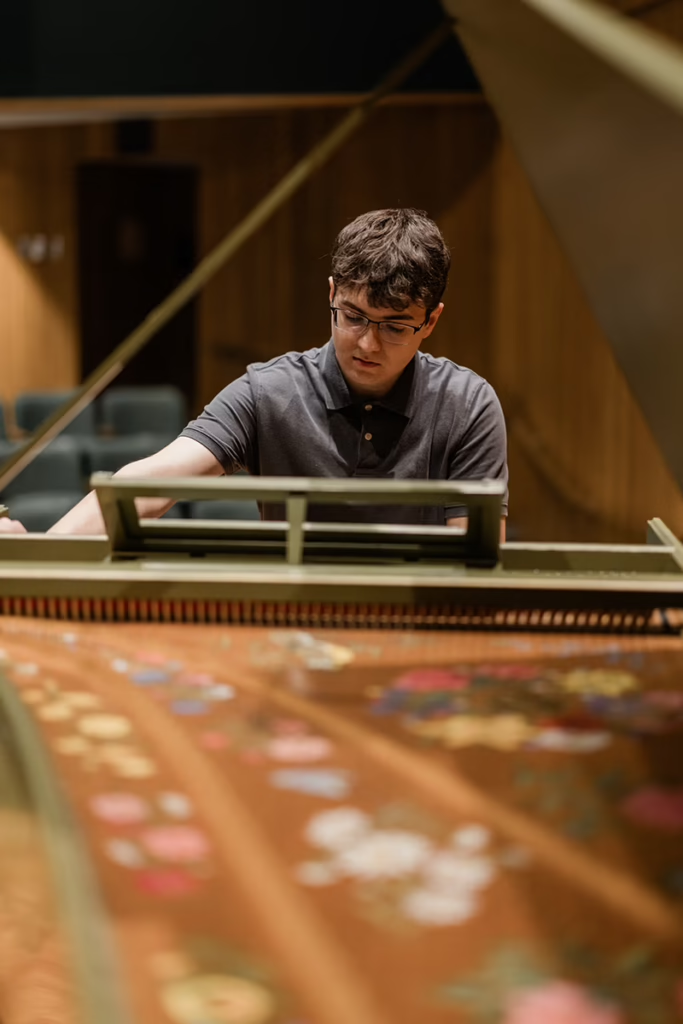
The Hubbard Harpsichord displayed on the stage of Beckwith Recital Hall in NDSU's Challey School of Music

Have you ever heard the sound a harpsichord makes? 

Unlike a piano, the harpsichord’s notes don’t swell or sustain; they appear and vanish. Bright, plucky, crisp, metallic. 

This harpsichord belongs to the NDSU Challey School of Music. Prominent in Handel’s Messiah and the Madrigal Dinners, it offers listeners an authentic Baroque experience. Between performances, the instrument sits quietly behind the stage in Beckwith Recital Hall.

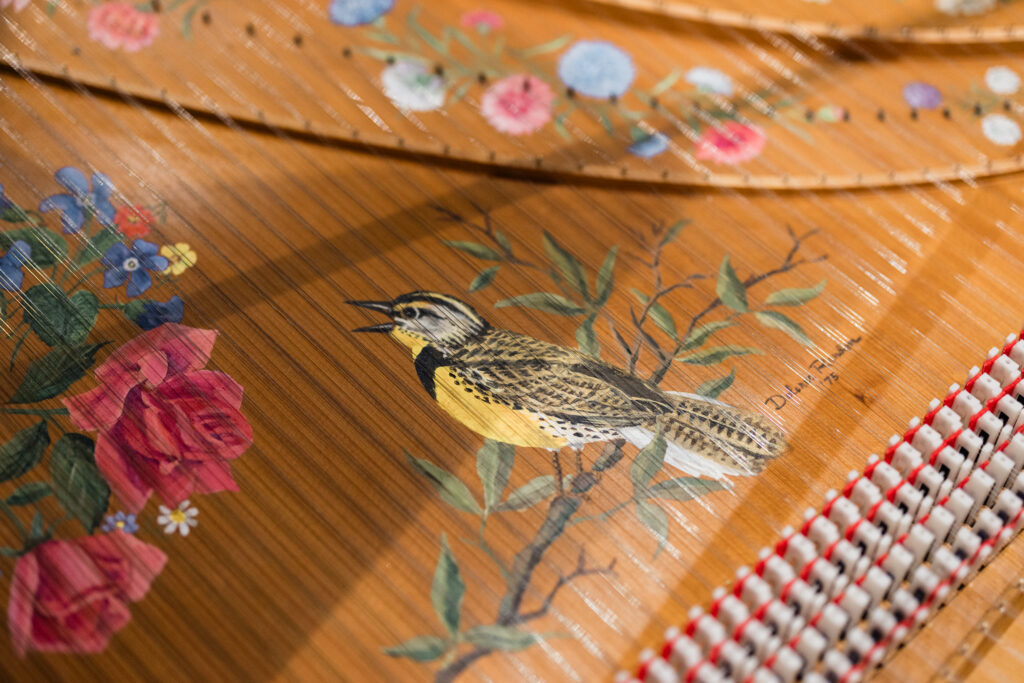
Overlooking its strings and soundboard, flowers, butterflies, and a western meadowlark — North Dakota’s state bird — were painted by local artist Dolores Renden.

Its keys, located in two rows, are black with natural wood ends. Above them is the inscription: “R. Laskey – Fargo – 1975.” 

The harpsichord was built by an engineer with a lifelong love of music. Roger Laskey purchased its kit, made popular in the 1960s by Frank Hubbard, as a hobby project, and he played it often.

The harpsichord remained in the Laskey home for years, where it was played by Roger and his family, including at his daughter’s wedding. He donated it to NDSU in 2007.

The Hubbard Harpsichord displayed on the stage of Beckwith Recital Hall in NDSU's Challey School of Music
Close-up of the art painted on the soundboard of the Harpsichord.

Have you ever heard the sound a harpsichord makes? 

Unlike a piano, the harpsichord’s notes don’t swell or sustain; they appear and vanish. Bright, plucky, crisp, metallic. 

This harpsichord belongs to the  NDSU Challey School of Music. Prominent in Handel’s Messiah and the Madrigal Dinners, it offers listeners an authentic Baroque experience. Between performances, the instrument sits quietly behind the stage in Beckwith Recital Hall. 

Overlooking its strings and soundboard, flowers, butterflies, and a western meadowlark — North Dakota’s state bird — were painted by local artist Dolores Renden.

Its keys, located in two rows, are black with natural wood ends. Above them is the inscription: “R. Laskey – Fargo – 1975.” 

The harpsichord was built by an engineer with a lifelong love of music. Roger Laskey purchased its kit, made popular in the 1960s by Frank Hubbard, as a hobby project, and he played it often.

The harpsichord remained in the Laskey home for years, where it was played by Roger and his family, including at his daughter’s wedding. He donated it to NDSU in 2007.

Hear adjunct piano professor Dr. Thiago Ferreira, music major Zakk Volk ’27, and library associate Zach Drechsel ’18 describe how they combined craftmanship with modern technology to bring the harpsichord back to life. (Video by Xyle André Rubianes Altura ’26)

The harpsichord was given a new life at NDSU, but eventually it began to show its age. Once bright and exact, its strings were old, oxidized, and dull sounding. The highest notes were missing parts borrowed to repair the middle range. Its tongues, which allow the plectra to pluck the strings, were worn out, making it unreliable for performances. 

While fixable, there was a challenge: the manufacturer no longer made replacement parts. Enter the NDSU Libraries Digital Fabrication Lab. 

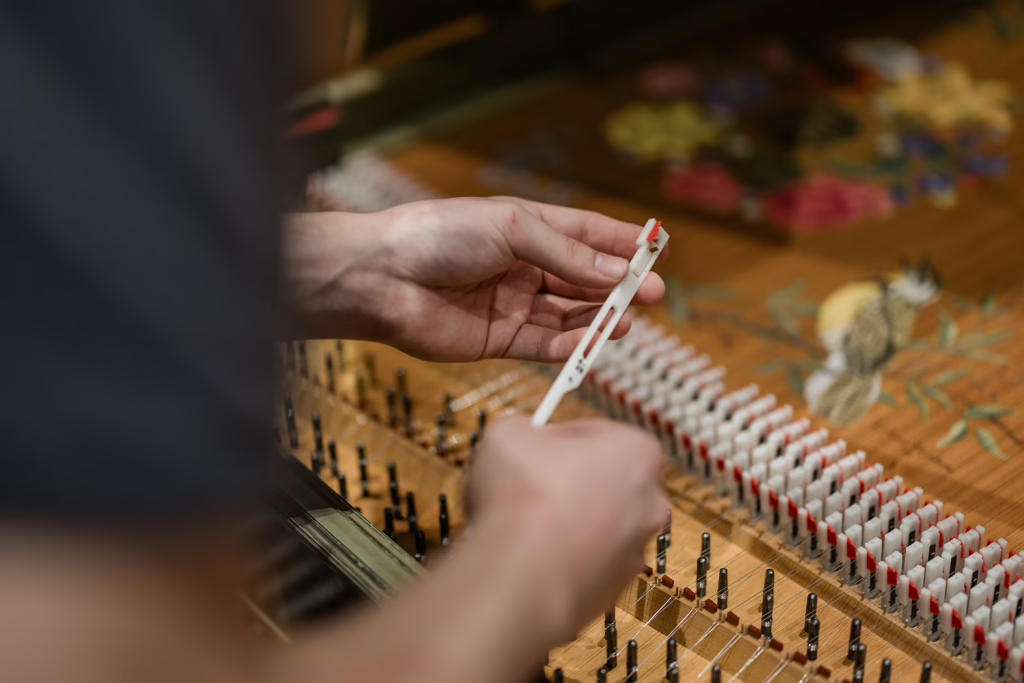
With code and filament, more than 200 3D-printed replacement components were produced. Small, precise custom pieces designed to withstand the repetition of practice and performance. Each part was replaced by hand.

A view of one of the 200 3D-printed replacement components for the Harpsichord, printed at the NDSU Libraries Digital Fabrication Lab.
NDSU Student Zakk Volk interacting with the Hubbard Harpsichord.

Exactly 50 years after Roger built the harpsichord, music major and business administration minor Zakk Volk ’27 — with guidance from piano technician Christian Heaford — removed its old jacks and springs, then snapped the newly printed pieces into place. The strings responded with their original sound.

“It’s unlikely that even the most experienced harpsichord player would suspect new parts,” Zakk said. “They function so perfectly and accurately.” 

As a musician, Zakk is grateful to live in a time when innovative technology can breathe new life into an old instrument, one that may otherwise have slowly fallen out of use. 

“I believe musical instruments have their own character and story that live within them,” he said. “We are just one part of preserving this one for the next few decades.” 

Share This Story

Related Stories

Margaret and her husband, Hugh Veit ’79, established the Eleanor S. Fitzgerald Memorial Graduate Student Scholarship to support NDSU students earning advanced degrees in the Department of Health, Nutrition, and Exercise Sciences or the Department of Human Development and Family Science.

Core areas of home economics remain part of current NDSU degree programs such as accounting; apparel, retail merchandising, and design; education; family and consumer science; financial planning; human development and family science; interior design; and nutrition science.

Home economics programs opened doors, particularly for women, to earn college degrees and pursue careers in education, Extension, state and federal government, business and industry, health care, and more. NDAC listed domestic economy as one of its courses in its founding year, 1890.

Established by Dr. Teresa Conner, dean of the NDSU College of Health and Human Sciences, and co-chaired by Dr. Margaret Fitzgerald ’83 and Col. Esther Meyers ’75, the Wisdom Keepers provide support and share their knowledge and expertise with students, faculty, staff, and leadership in the College.

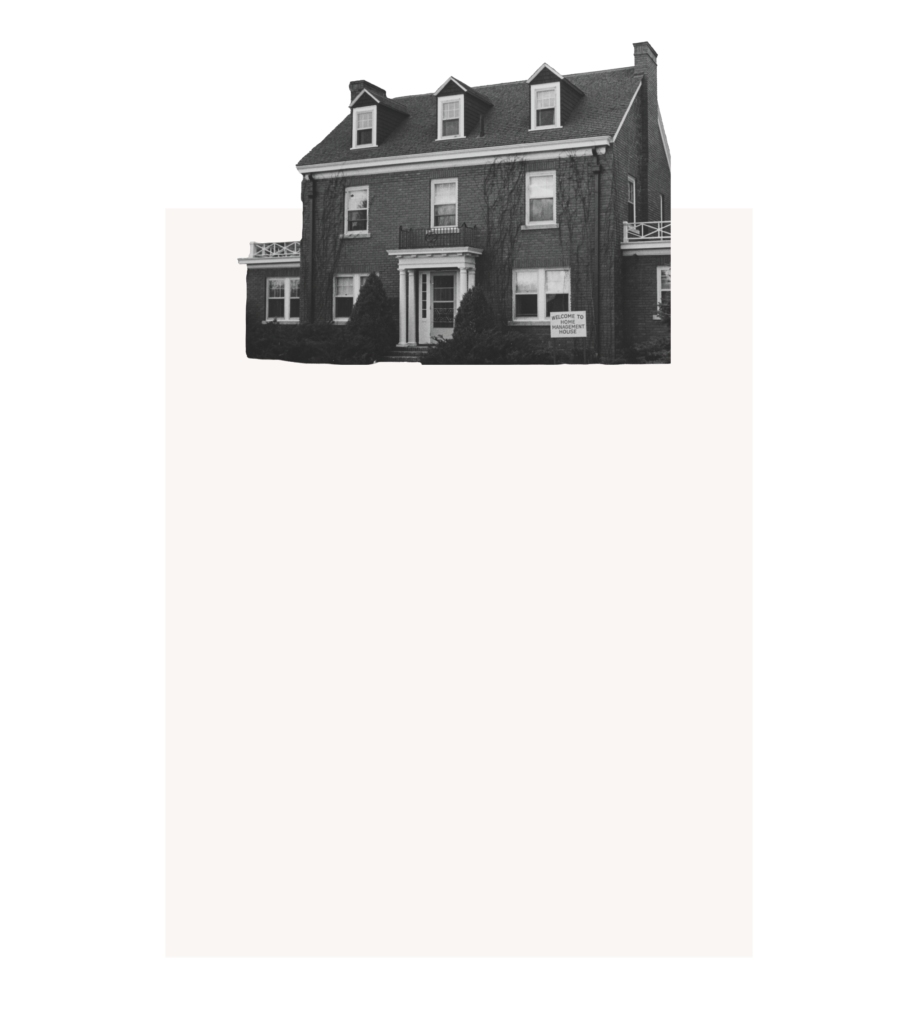
The home management house at NDAC was the first facility built on a college campus specifically for home management practice. In 1954, it was named in honor of Alba Bales, the first female academic dean at NDAC.