

Everything a team does is personal. Everything a team does is plural. Everything a team does, it does together.
Read More


Shane ’92 and Mary ’94 Wendel met as student-athletes competing in track and field at North Dakota State University. Shane ran the 400 meters (m) as well as some relay events, and Mary competed in the pentathlon, which includes the 60m hurdles, high jump, shot put, long jump, and 800m run, and provisionally qualified for Nationals in the heptathlon, which adds the 200m sprint and javelin to the previous five events. Mary needed some coaxing from friends before she gave Shane a chance at a date, though, she said with a smile, it paid off. As Shane put it, “Eventually, I caught her.”
Their NDSU experience played a pivotal role in their relationship and lives, and in 2012 Shane and Mary established an endowed scholarship to support current and future student-athletes competing in men’s track and field at NDSU.
Mary was recruited to come to NDSU and train with the women’s track and field coach, Jerry Gores. The decision to attend NDSU was easy; she always knew she wanted to stay in North Dakota, and when Gores spoke with her, he talked about his athletes as a team rather than just a bunch of individuals.
“I really liked the team concept and the tradition,” Mary said. “I could tell how good their team was because of how the coach talked to me.”
Shane chose to attend NDSU because of its pharmacy school. He came from three generations of farming and ranching, and when he graduated high school in the mid-to-late-80s, crops were poor, prices were bad, and many farmers were struggling. He had four brothers and seven sisters, and his dad told him and his siblings that they all needed to go to college and find something to do — Shane pursued pharmacy because he liked chemistry. Then, the spring of his freshman year, he walked into Don Larson’s office, the men’s track and field coach, and told him he wanted to run.
“Lars,” as Shane called him, “told me that lots of people walked on, and they fit somewhere between a Division III athlete and an All-American. He told me I’d probably fit in there somewhere, and I was welcome to come run.”
Shane walked-on the team his sophomore year and earned an athletic scholarship. He was fortunate enough to compete in nationals and earned an All-American certificate in the 400x100m relay.
So, in 2012, when Shane and Mary’s friend and former teammate, Cal Carlson, encouraged them to consider establishing a student-athlete scholarship endowment at NDSU, the choice was fairly easy.
“Not everybody is offered a scholarship to begin with,” Mary said, “and we wanted our team to have opportunities for as many student-athletes as possible.”
Still, they weren’t sure how difficult the process of establishing an endowment would be.
“Cal told me it wasn’t that hard to start, and you could actually build it for several years until you met a certain threshold for it to start,” Shane said, “and Lars came to me and just said, ‘The men’s track team is not fully funded for scholarships. If you’re interested, here’s an option for giving back.’ I wanted to help that because it helped me.”
“Track takes a lot of time — it’s almost a full-year sport,” Mary said. “That’s a lot of time to put into something, and the athletes deserve it — they deserve a little bit of help with their tuition.”
When Shane and Mary established their scholarship endowment, they chose to give preference to student-athletes who are especially meaningful to them — Class B athletes from North Dakota.
“Class B athletes are often involved in multiple sports,” Shane said, “and when they get to college, they develop, and their curve of improvement is a lot higher than some kids that come from bigger schools with better training and facilities, kids who are more specialized in their sport. I just think it’s good for [Class B] kids to be rewarded when they meet that curve, that they should also be rewarded for their successes.”
As a Class B athlete himself, Shane experienced his own growth trajectory at NDSU. In Shane’s junior year, he and three other NDSU athletes competed in the mile relay in an attempt to seize a conference title from their biggest competitor, South Dakota.
In that race, NDSU’s mile relay team consisted of Shane — a tried and true 400m runner — a high jumper, a hurdler, and Cal, a 100m sprinter. By a margin of two- or three-hundreths of a second, the four athletes placed 5th and scored enough points to help NDSU win another outdoor conference title.
“Track traditionally is an individual sport,” Shane said, “but at NDSU things are done as a team. We only took 5th place [in the relay], but it didn’t matter because we had a bigger goal in mind. Everybody was watching, everybody was high-fiving, everybody rallied for each other. That’s why NDSU is such a perennial powerhouse — it’s the most team-oriented school of anywhere I know.”
In practices and competitions, Shane and Mary said they recall the spirit of NDSU track and field as one of mutual support and respect — but the athletes also enjoyed a little rivalry. In springtime, Mary remembers racing the guys to track practice at Concordia College, trying different routes to find the quickest shortcut there. She said the girls also joked that their practices were way more difficult than the men’s. Nonetheless, she and Shane fondly remember cheering for their fellow athletes on the men’s and women’s teams. When asked about their greatest accomplishments, Mary described holding the blocks for other runners, and Shane recalled watching as one of NDSU’s high jumpers jumped over seven feet to win a conference meet.
Mary credits the coaches for fostering an environment of support, and Shane suggests that the comradery stems from the kind of student-athletes that NDSU recruits.
“I think that’s what they look for — hardworking, humble kids,” Shane said.
His senior year, he and his 4x100m relay team qualified for nationals, helped NDSU win the conference meet, and set a conference record that held for more than ten years. How did they do it? Shane says it was simply “the will and tradition to get it done.”
It’s the same way he describes his final years of pharmacy school, particularly in the clinically-oriented pharmacy classes, when he and his fellow classmates felt the pressure mounting. In their minds, Shane said, they only had one option — to keep pushing toward the finish line.
“Pharmacy school was not easy,” Shane said, “but that was OK because that’s the way I grew up as a child in a family of twelve. When I went to school, I knew I had to work hard, because failure wasn’t an option. So there was a little bit of pressure, but you just dug in and got it done.”
Thankfully, whether on the track or in the classroom, he didn’t have to go it alone. Shane said his teachers were very invested in helping him and his classmates succeed. To this day, he works with some NDSU faculty and supervises current NDSU students in rotations at his own pharmacies.
“Being a sibling in a big family, going to college and being on a team, and owning several pharmacies takes a lot of teamwork,” Shane said. “NDSU was great at setting the stage of being a teammate and doing something greater than yourself, being a part of something greater than yourself.”
In the Wendel family, that tradition of Bison excellence was passed on to the next generation. Shane and Mary say they’ll never forget the moment Lars, Shane’s former coach, called and told them he was going to recruit their son, Connor.
“It brought me to tears,” Shane said, “and he did the same thing I did — walked on, earned himself a scholarship, and competed for Lars. The best part is, Connor’s last year was Lars’ last year, so this head coach went two generations in our family and several other families too.”
Connor, who graduated with a degree in agribusiness in spring 2021, competed in the 400m hurdles as well as multiple sprints, and throughout his athletic career, Shane and Mary never sat in the stands — instead, they cheered for him right on the field.
“As an athlete you never turn around and sit in the stands, and as you transition from an athlete to a parent and alumni, the adrenaline of competition never goes away,” Shane said. “Even if your kids aren’t competing and you go back to a conference meet, you can just feel it.”
Although Connor has graduated, Shane and Mary plan to continue cheering for the men’s and women’s track and field athletes at NDSU. Mary, who coached the Carrington High School track and field team for many years, still knows many NDSU student-athletes, and she and Shane continue to encourage kids in their community to attend NDSU.
“NDSU still has kids that want to be a part of the team, and it’s not just about them — it’s something greater than them,” Shane said. “That’s the culture that was set when we were there, and now with our son just graduating it’s still the same 25 years later. It’s awesome.”
_____
If you would like to contribute to the Shane and Mary Wendel Scholarship Fund or receive information on how to fund your own endowment, contact Jack Maughan, NDSU senior associate athletic director, via email or Stefanie Kelly, director of athletic development, Twin Cities, via email.
North Dakota taxpayers are eligible for a 40% state tax credit for contributions to an existing endowment or upon establishing an endowment.
Everything a team does is personal. Everything a team does is plural. Everything a team does, it does together.
Read MoreStrategy, willpower, and mental resilience are skills Bison wrestlers are practicing on the mat and off.
Read More Margaret and her husband, Hugh Veit ’79, established the Eleanor S. Fitzgerald Memorial Graduate Student Scholarship to support NDSU students earning advanced degrees in the Department of Health, Nutrition, and Exercise Sciences or the Department of Human Development and Family Science.

Core areas of home economics remain part of current NDSU degree programs such as accounting; apparel, retail merchandising, and design; education; family and consumer science; financial planning; human development and family science; interior design; and nutrition science.

Home economics programs opened doors, particularly for women, to earn college degrees and pursue careers in education, Extension, state and federal government, business and industry, health care, and more. NDAC listed domestic economy as one of its courses in its founding year, 1890.

Established by Dr. Teresa Conner, dean of the NDSU College of Health and Human Sciences, and co-chaired by Dr. Margaret Fitzgerald ’83 and Col. Esther Meyers ’75, the Wisdom Keepers provide support and share their knowledge and expertise with students, faculty, staff, and leadership in the College.
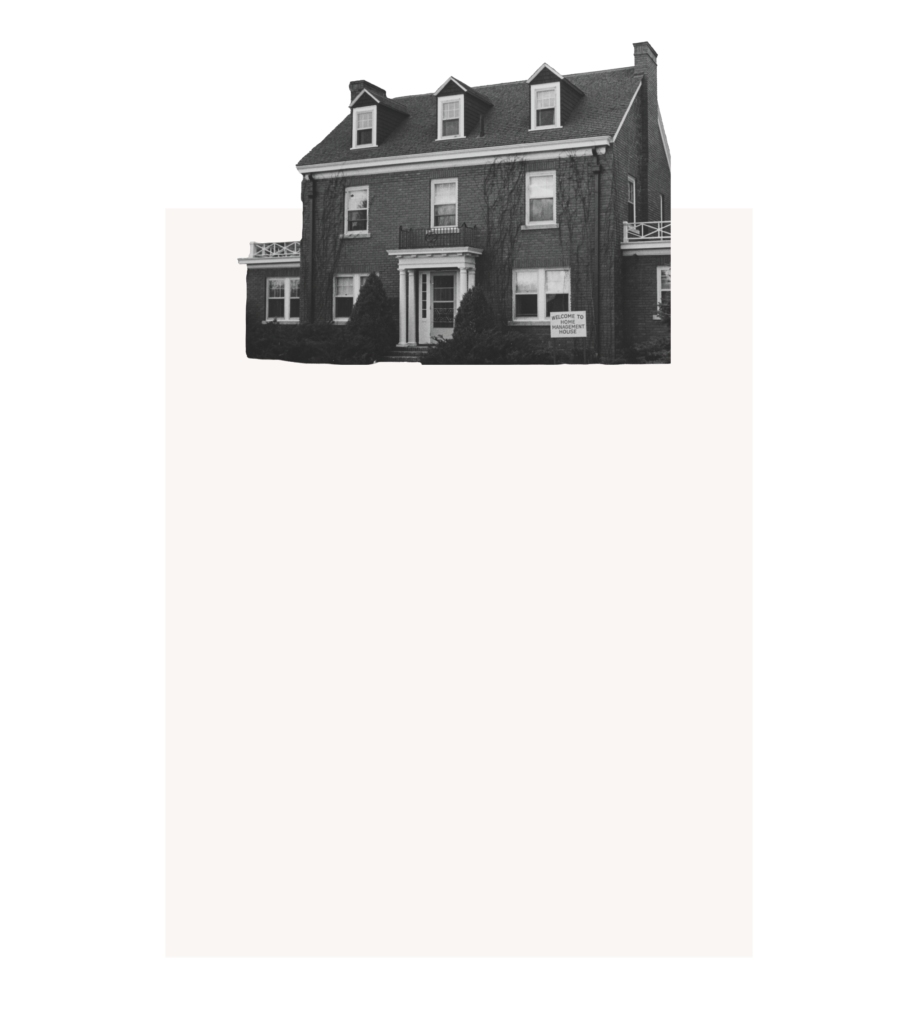
The home management house at NDAC was the first facility built on a college campus specifically for home management practice. In 1954, it was named in honor of Alba Bales, the first female academic dean at NDAC.